ALUMNI
Nothing Was Accidental: Rosi’s Story of Growth and Resilience
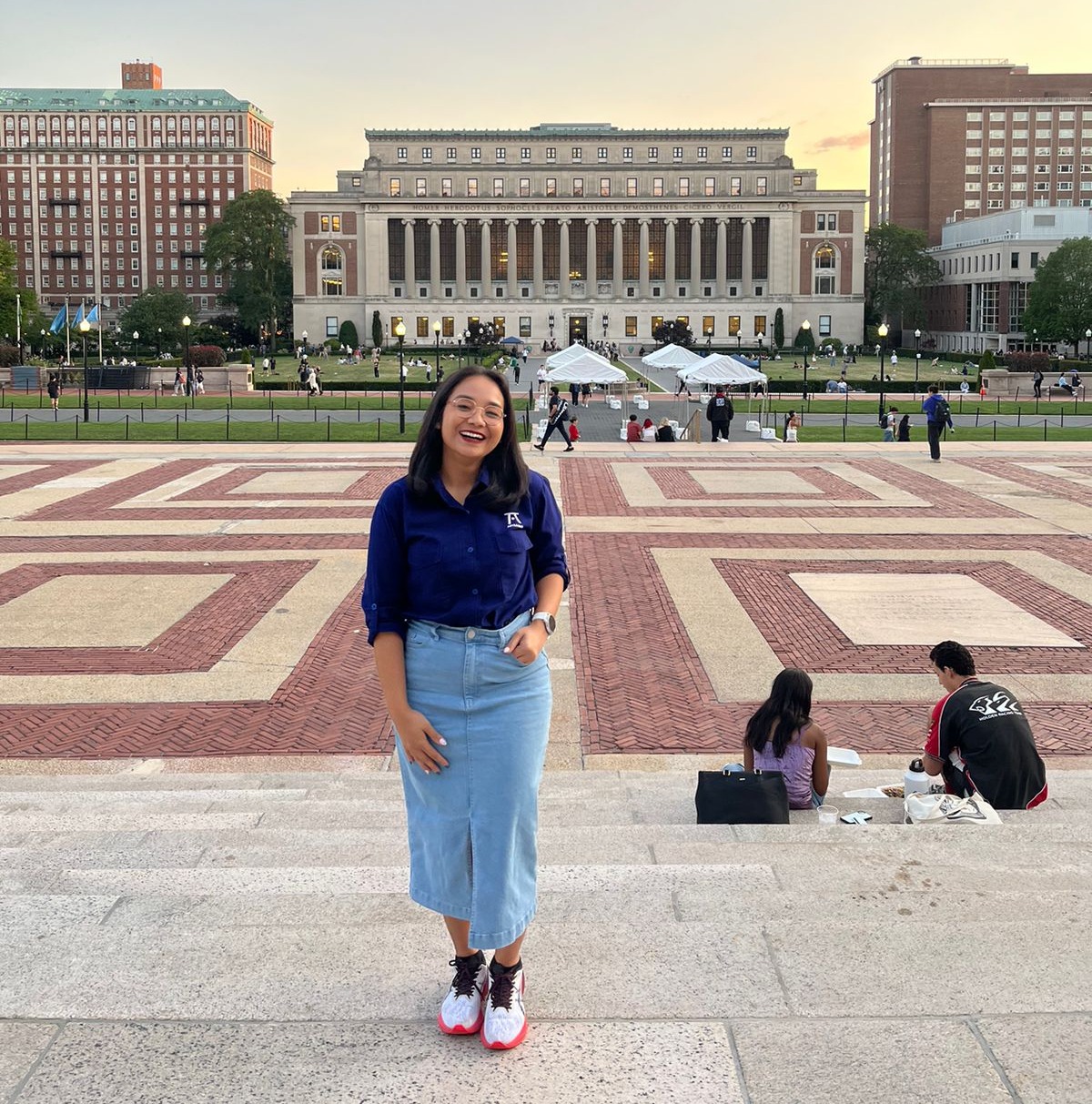
Maria Dewi Rosari, known as Rosi, began her academic journey with a clear passion for the English language and a sincere aspiration to become an English teacher. From an early age, she was drawn to languages, particularly English, and gradually nurtured the dream of one day standing in the classroom as an educator. This strong interest led her to enroll in the English Education Study Program (PBI) at Universitas Sanata Dharma in 2012. After completing her undergraduate degree in 2016 and gaining professional experience for two years, Rosi chose to deepen her academic and pedagogical competence by continuing her studies in the Master’s Program in English Language Education (MPBI) in 2018, which she completed in 2020.
During her time in the Master’s Program in English Language Education (MPBI), Rosi faced significant academic and personal challenges. Pursuing her master’s degree while working was not an easy decision. The academic demands were intense—each semester required multiple research papers and rigorous scholarly engagement. At times, the workload felt overwhelming. Yet instead of retreating, she developed strategies to survive and grow. Reflecting on that period, she shared that one principle helped her persist: breaking large tasks into smaller, achievable goals. Drawing from the concept of instructional scaffolding in Jerome Bruner’s Research in the 1970s and Vygotsky in 1962, she learned in class, she explained, “When there is a big task, I try to break it down into smaller parts. Even if I only have 30 minutes to work on it, it’s still progress.” This mindset became her anchor. Rather than being discouraged by the magnitude of academic expectations, she learned to focus on steady movement forward.
Beyond the academic rigor, what made Rosi’s journey in MPBI truly meaningful was her relationship with the lecturers. She consistently describes them not only as supervisors, but as mentors who were genuinely present in her growth. One experience that left a deep impression on her was during her teaching internship in Myanmar under the supervision of Pak Kus. She recalled how he did not simply come to observe and grade her performance, but carefully noticed aspects she had overlooked, particularly related to cultural differences in the classroom. That feedback opened her eyes to the importance of being more culturally sensitive and considerate as a teacher. For Rosi, it was a powerful reminder that teaching is not only about delivering material, but about understanding context and learners’ backgrounds.
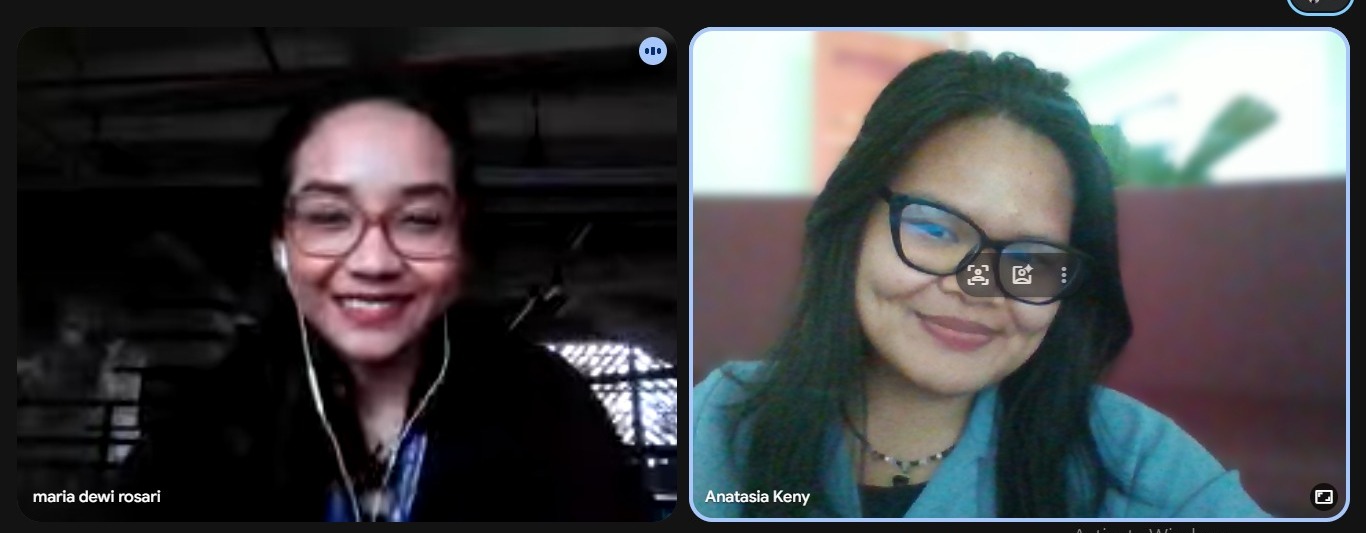
Her relationship with her thesis advisor, Pak Ouda, was equally formative. She remembers struggling to find a matching consultation schedule, as both of them were busy. Unexpectedly, he offered to meet on a Sunday. “I didn’t even dare to ask for a Sunday meeting because it’s not a working day, but he offered first,” she recalled. That gesture deeply touched her. It reflected a level of dedication and care that went beyond formal obligation. Even after she graduated and became a lecturer herself, he continued to support her professionally, including helping her institution by serving as an lecturer’s academic performance assessor when they needed one.
Looking back, Rosi often expresses deep gratitude for having the opportunity to be part of Sanata Dharma University, especially in PBI & MPBI as the institution opened doors that significantly broadened her horizons. Through its strong academic culture and Jesuit network across the globe, she was able to expand her experiences beyond Indonesia and engage in meaningful cross-cultural learning across Asia. During her undergraduate years, she participated in international programs such as 2014 ACUCAa Student Camp at Fu Jen Catholic University in Taiwan and later had the opportunity to teach in Radbumroongsilp School Sena, Ayutthaya, Thailand for a year. While pursuing her master’s degree, she further enriched her teaching experience through an internship program in one of Jesuit’s educational institution named St. Aloysius Gonzaga Institute of Higher Studies, Myanmar.
All the experiences she accumulated during her years at Sanata Dharma, teaching across cultures, engaging in international programs, and being mentored closely by her lecturers, eventually led her to one of the most significant milestones in her career. In 2024, Rosi was selected as a grantee of the prestigious Fulbright Foreign Language Teaching Assistant Program (FLTA). Through this program, she served as an Indonesian language instructor (BIPA) at Columbia University in the City of New York, USA, for one academic year, from August 2024 to May 2025.
.jpg)
For Rosi, being accepted into Fulbright was not merely an achievement, it was a confirmation that the “small” opportunities she had embraced over the years truly mattered. She realized then that nothing was accidental. Each experience during her time at Sanata Dharma had prepared her step by step for that global stage. Through Fulbright, she not only represented Indonesia and her alma mater internationally, but also deepened her identity as an educator who is able to navigate diverse linguistic and cultural contexts with confidence and humility.
After completing the Fulbright program, which requires participants to return to Indonesia. She came back not only with international experience, but with a renewed sense of responsibility. Rosi resumed her academic career at Politeknik Astra (ASTRAtech), an institution under the Astra Group, where she teaches English for Specific Purposes, particularly English for Engineering. Teaching in an industrial city context has its own challenges, as the demand and orientation toward English learning differ from those in Yogyakarta. Yet Rosi embraces this context as part of her professional calling. In addition to her teaching role, she now serves in ASTRAtech’s International Office, where she oversees international mobility programs especially for students. In this role, she is committed to widening access to international exposure by creating opportunities for students who might not otherwise have them—echoing the formative experience she herself once had as a student. Through her work in international mobility, she seeks to ensure that global learning is not a privilege for a few, but a possibility for many within her institution. She once recalled a meaningful statement from a leader at her institution who said, “For English lecturers, we still trust Sanata Dharma.” That sentence stayed with her. It was both a compliment and a reminder that the name of her alma mater carries expectations. For Rosi, being a lecturer today is not simply about delivering lessons; it is about upholding the academic values, professionalism, and integrity she learned during her years at Sanata Dharma.
Reflecting on her journey, Rosi does not see it as a series of isolated achievements, but as a continuous process of becoming. Every demanding assignment, every moment of doubt, every piece of feedback, and every opportunity to step outside her comfort zone contributed to shaping the educator she is today. From the classrooms of Sanata Dharma to the global stage of Fulbright and back to Indonesia, her path reflects a deep commitment not only to personal excellence, but to meaningful contribution. Now, as she stands before her own students, she carries forward the mentorship she once received, the discipline she cultivated, and the values she deeply internalized. Her story is a reminder that education, when lived fully and reflectively, does not merely grant degrees, it forms character, purpose, and a lifelong dedication to serving others.