NEWS
ISJB educators embraced integrated teaching framework to combat digital challenges and transform student formation
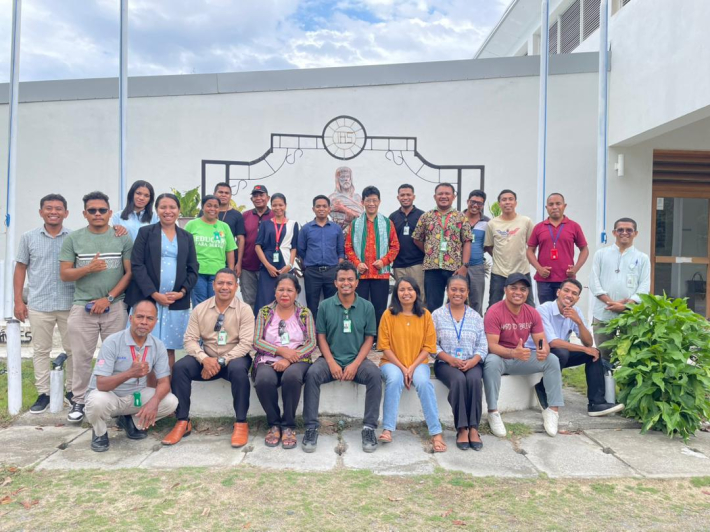
DILI, Timor-Leste — A senior lecturer of Sanata Dharma University, Markus Budiraharjo, Ed.M., Ed.D. recently conducted an intensive three-day professional development workshop to 21 faculty members of Instituto São João de Brito (ISJB). A Jesuit higher education institution founded in 2016, ISJB houses four study programs, English Education, Math Education, Religious Education, and Portuguese Education. Currently it serves 420 active students.
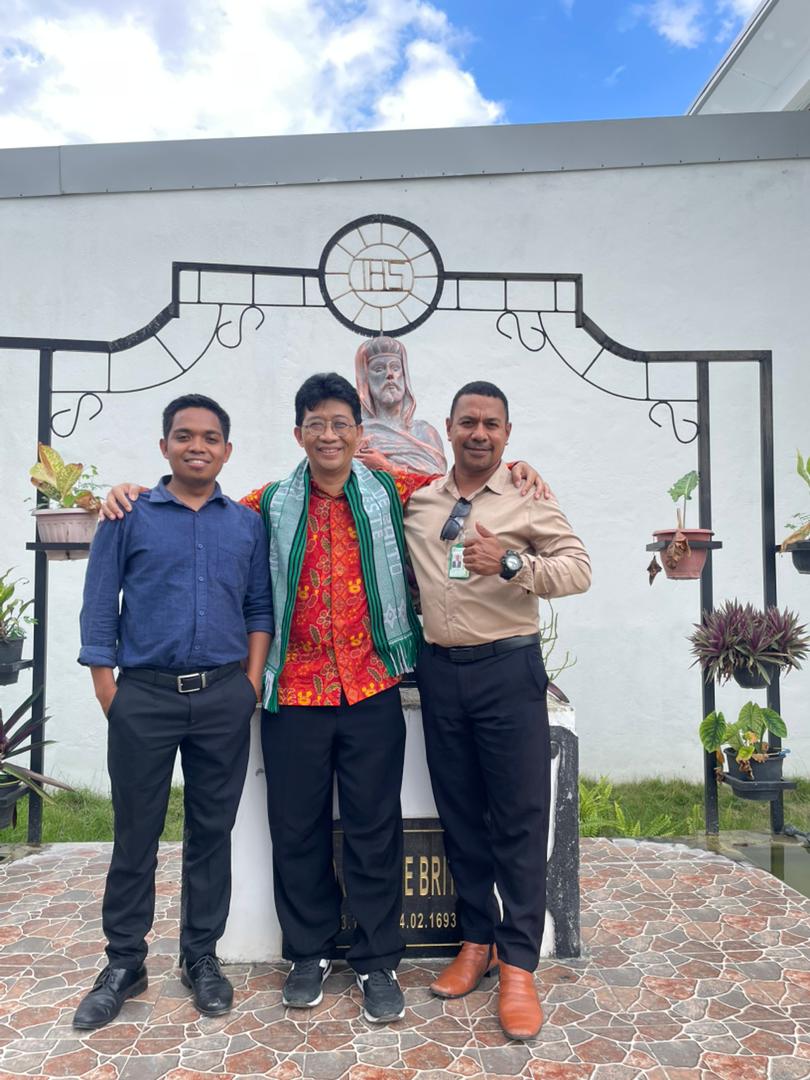
The workshop was designed to fundamentally overhaul their approach to instruction by integrating three critical pedagogical models: the Ignatian Pedagogical Paradigm (IPP), Project-Based Learning (PBL), and Outcome-Based Education (OBE). The workshop, held from December 11 to 13, 2025, aimed to move faculty beyond viewing these concepts as "separate concepts" toward adopting a "unified, holistic approach to learning". The ultimate objective was shifting the teaching focus from merely measuring what students "know" to fostering what they "become".
The training was rooted in the specific challenges facing the local education context. Pre-training surveys highlighted that students frequently "demonstrate poor learning skills", often come from "low socio-economic status (poor)", and struggle with "low motivation to learn". Critically, educators reported that students show a tendency to "make use of AI to replace their thinking skills". These challenges required a pedagogical response that moved beyond traditional assessment methods, which educators noted often rely on "standardized testing is commonly used to measure students' achievement" and heavily utilize "summative assessments to measure the students' success" in an effort "to make sure that all students to have good scores".
Prior to the intervention, educators often viewed IPP as "static and rigidly structured” —a fixed format simply used "to help teachers in compiling a lesson plan". Post-training feedback confirmed a radical shift in this perspective. Participants reported gaining a "a new roadmap and compass", realizing that teaching is "an art to design transformative experience grounded in a set of clear goals in mind". IPP was redefined as transcending a "mere teaching method" to become a "philosophy of life" and a "dynamic guide". Participants successfully clarified how IPP "is integrated with 4C" and how learning goals must combine "head, heart, and hands".
The workshop provided both conceptual clarity and practical skill mastery. Participants reported fundamental takeaways including the technical skill of "Alignment of Program Learning Outcomes - Course Learning Outcomes" and how to integrate institutional values, such as the "5 C’s", "servant leadership", and "social justice", into their course designs. A core focus of the training was equipping educators to manage the digital challenge, introducing "Generative AI" tools like "NotebookLM". Participants committed to leveraging this knowledge to "Help students to be aware of the advantages and disadvantages of AI" and provide "more authentic learning than AI generative learning", ensuring that technology remains a "learning accompaniment" rather than a replacement for cognitive effort.
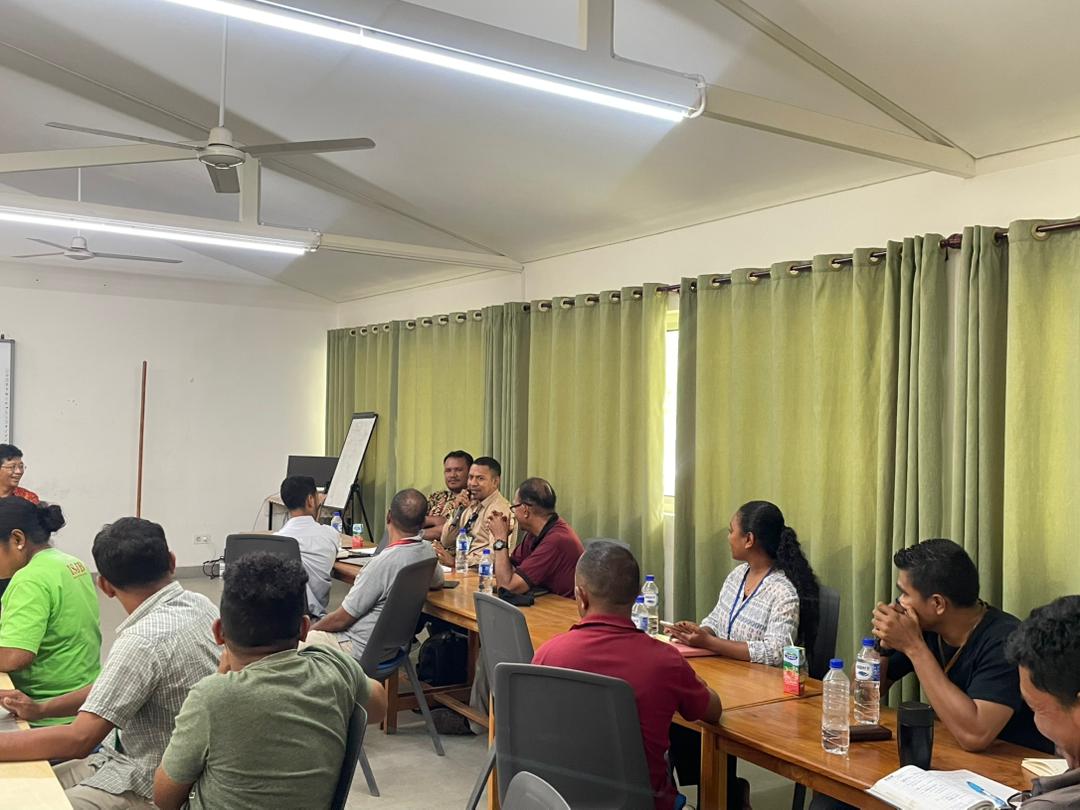
The execution of the three-day program was highly successful, with the materials and training strategies overwhelmingly rated "Excellent" by participants. Fueled by this momentum, educators made profound personal commitments, including "reconsidering the gift of vocation as a teacher" and becoming "an accountable educator, focusing on competence and commitment". However, the success is contingent on institutional support. Participants strongly urged the institution to immediately "install Learning Management System (LMS)" and "install Turnitin", and stressed that "a single-shot training will never be enough to implement what has been learned", requesting "a sustainable guide of PBL - OBE - IPP implementation". The activity successfully sparked a widespread commitment to instructional reform, moving teachers out of their comfort zone and toward transformative teaching.
eMBi
- Juthatip Mingkun and Co-Researchers Explore Cross-Cultural Teaching Experiences in Thailand
- Caku and Co-Researchers Examine Code-Switching in Viewer Comments on Indonesian Educational YouTube Channel
- MPBI Students, Gabriela and Friends Publish Research Article in Journal of English Educational Study (JEES)
- MPBI Shares Ideas on SDG 4 and Educational Transformation at International Forum
- MPBI Opens 2026 Scholarship Programme for Outstanding Sanata Dharma Alumni
- Becoming a Living Witness: Master’s Program of English Education, Sanata Dharma University Professor Empowers Lay Ministers in St. Maria Assumpta, Parish, Gamping Through Public Speaking Workshop
- Exploring the Responsible Use of Generative AI in Education: MPBI Hosts National Webinar on Ethics, Practices, and Collaboration
- English Mastery and Mindful Pedagogy: Sleman Educators Navigate Digital Friction at SMAN 2 Ngaglik
- Generative AI for Education: Ethics, Practices, and Collaboration
- Inspiring Story: Teacher Yooyee’s Transformative Learning Journey in Yogyakarta