NEWS
Graduate Students of Sanata Dharma Present Innovative AI-Focused Research at English Studies Conference
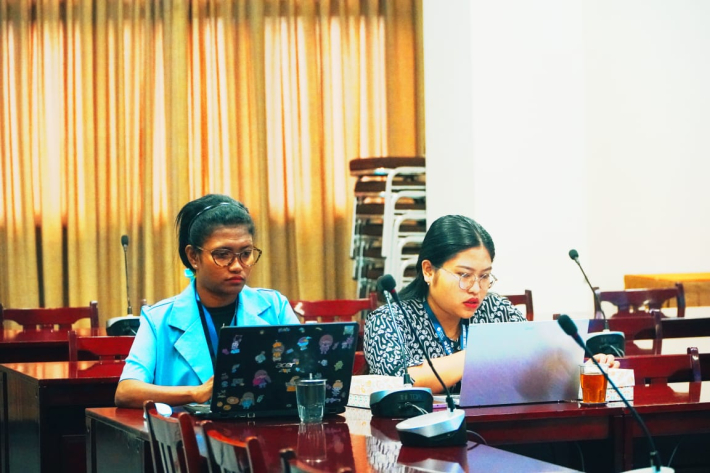
Yogyakarta, 26 May 2025 – Two graduate students from the English Education Master’s Program (MPBI) at Sanata Dharma University actively participated as presenters in the Graduate Conference Seminar of English Studies (GCS) held on Monday, 26 May 2025, at the university’s campus. The event served as a significant academic platform for students and researchers to explore the intersection of language, pragmatics, and artificial intelligence (AI) through interdisciplinary discussions. The seminar brought together a dynamic group of graduate students from both the English Literature and English Education master’s programs, as well as practicing teachers and researchers from diverse backgrounds.
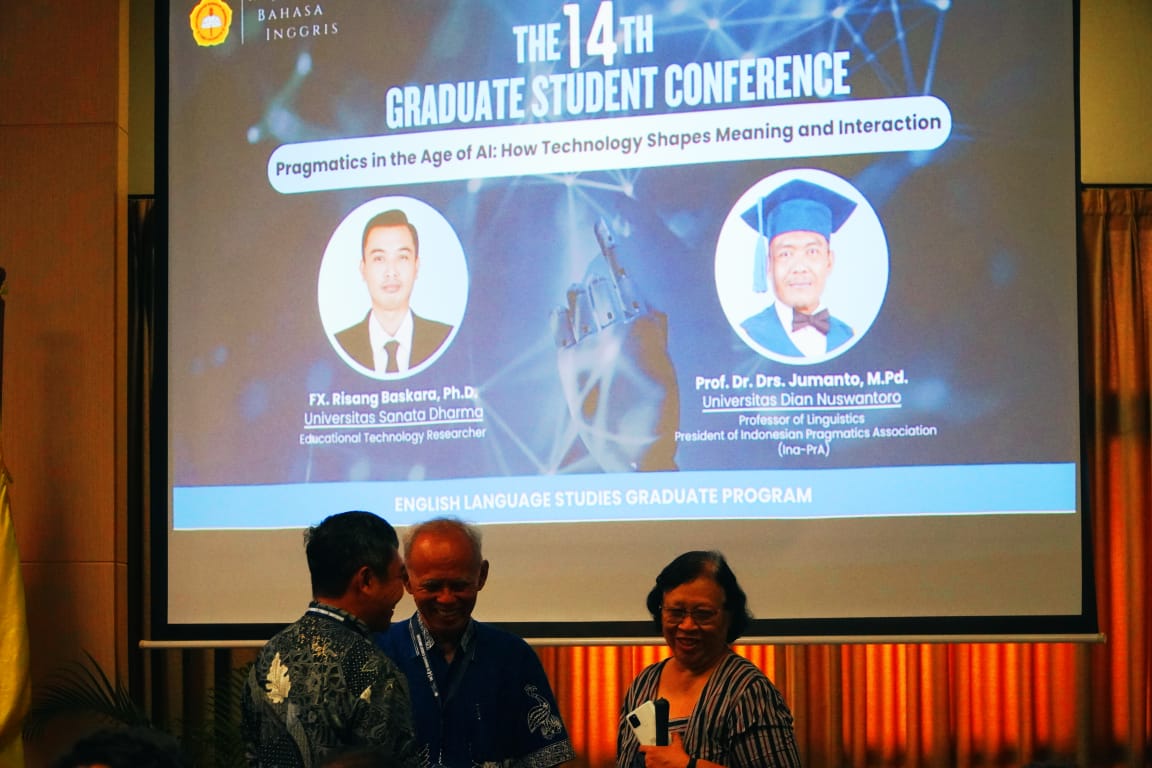
The academic dialogue was enriched by keynote speeches from FX. Risang Baskara, Ph.D. (Sanata Dharma University), who focused on the evolving roles of AI in communication, and Prof. Dr. Drs. Jumanto, M.Pd. (Universitas Dian Nuswantoro), who offered deep insights into the principles of pragmatics.
Among the presenters were Galuh Wuryaningtyas and Patrisia Soge, both second-semester students in the English Education Master’s Program, who introduced original and context-specific research focusing on the ethical and practical dimensions of AI use in education.
Galuh presented a paper titled “Dealing with AI Guilt: A Case of the First Two Years of GenAI Emergence.” Her research explored the emotional and ethical struggles experienced by undergraduate students using generative AI in academic settings. Using Chan’s (2024) concept of AI guilt as a foundation, she investigated how students experience guilt, what contributes to it, and the coping mechanisms they develop.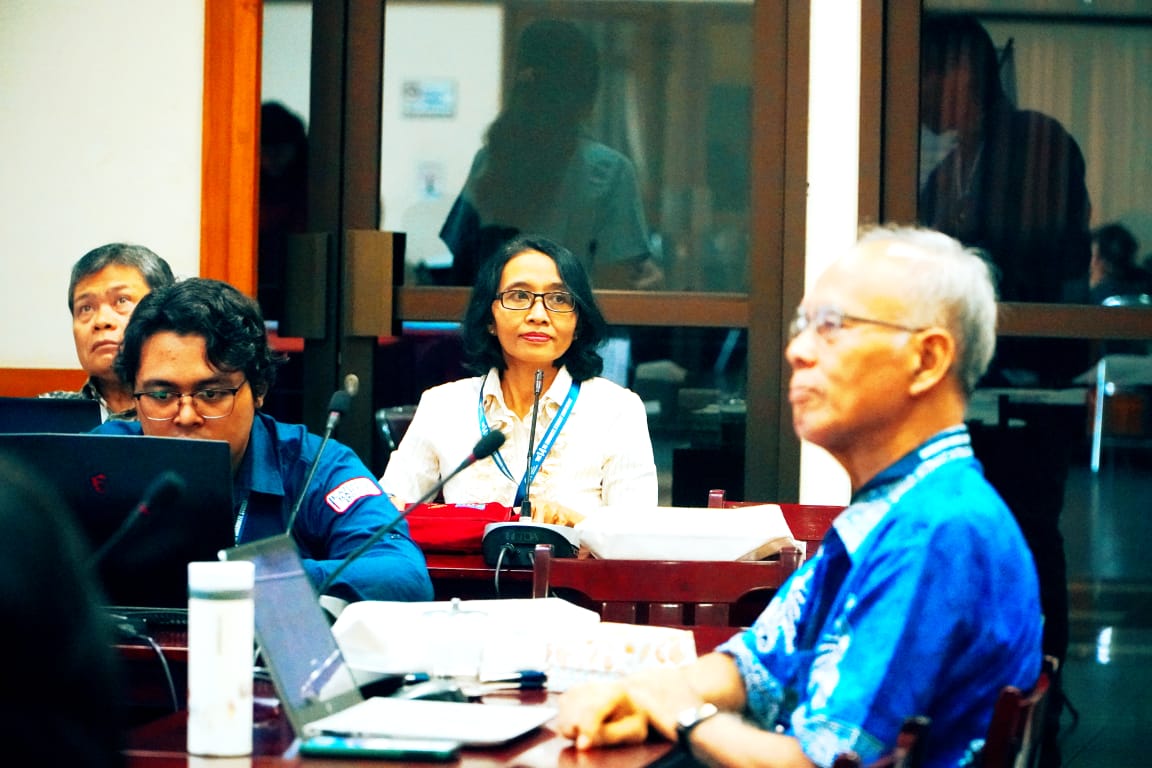
Galuh’s work contributed directly to the conference’s goals by foregrounding the psychological and behavioral effects of AI on learning and academic identity formation. Meanwhile, Patrisia Soge focused on the integration of AI in rural education, particularly in Eastern Indonesia. Her presentation, based on a mixed-method study conducted during her holiday in Maumere, examined EFL university students’ perceptions and experiences with AI tools such as ChatGPT, DeepL, and Grammarly.
“At first, I felt a bit different from the others, but I realized my topic also connects with how people use and understand language today. It makes me proud,” said Galuh.
Patrisia highlighted both the opportunities and risks AI poses in underserved areas, including issues of infrastructure, over-reliance, and ethical usage. Her research emphasized the importance of policy, training, and ethical awareness for equitable AI adoption in education.
Both students received enthusiastic feedback from fellow presenters, attendees, and keynote speakers. Galuh's audience appreciated the clarity and originality of her work, particularly her introduction of the term “AI guilt,” which many found relatable. Patrisia was praised for her courage to conduct field research as a second-semester student and for highlighting a unique, underrepresented perspective on AI use in rural academic contexts. Her topic sparked important questions from the audience and resonated with the larger themes of the conference.
Reflecting on their experience, both Galuh and Patrisia noted that the event broadened their understanding of language studies. While most other presentations centered on literature and pragmatics, their work introduced pressing issues related to AI and education, underscoring the relevance of technology in shaping contemporary communication and learning.
“At first, I felt a bit different from the others, but I realized my topic also connects with how people use and understand language today. It makes me proud,” said Galuh.
“This conference opened my eyes to how education, language, and meaning intersect. It showed me that research can take many forms, and each has value,” Patrisia added.
Their participation highlights Sanata Dharma University’s ongoing commitment to fostering critical, innovative, and globally relevant research among its graduate students.
-eMBi-
- Juthatip Mingkun and Co-Researchers Explore Cross-Cultural Teaching Experiences in Thailand
- Caku and Co-Researchers Examine Code-Switching in Viewer Comments on Indonesian Educational YouTube Channel
- MPBI Students, Gabriela and Friends Publish Research Article in Journal of English Educational Study (JEES)
- MPBI Shares Ideas on SDG 4 and Educational Transformation at International Forum
- MPBI Opens 2026 Scholarship Programme for Outstanding Sanata Dharma Alumni
- Becoming a Living Witness: Master’s Program of English Education, Sanata Dharma University Professor Empowers Lay Ministers in St. Maria Assumpta, Parish, Gamping Through Public Speaking Workshop
- Exploring the Responsible Use of Generative AI in Education: MPBI Hosts National Webinar on Ethics, Practices, and Collaboration
- English Mastery and Mindful Pedagogy: Sleman Educators Navigate Digital Friction at SMAN 2 Ngaglik
- Generative AI for Education: Ethics, Practices, and Collaboration
- Inspiring Story: Teacher Yooyee’s Transformative Learning Journey in Yogyakarta