NEWS
Church Community Shows Enthusiasm for Learning About AI: Educational Sarasehan at Nandan Parish Explores AI as a Learning Resource
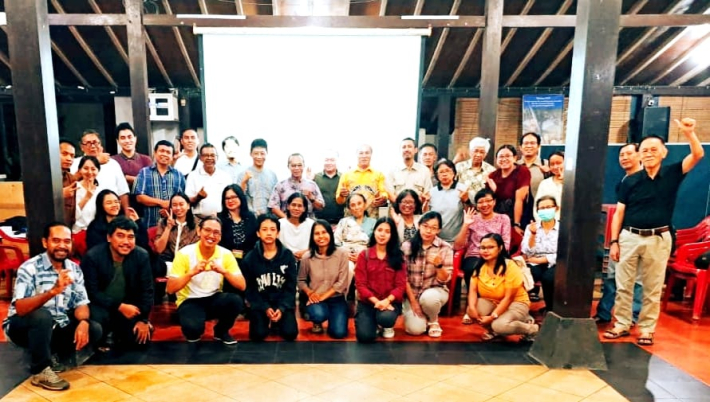
Nandan Parish, May 28, 2025 — The atmosphere at the Pendopo of Nandan Parish felt different that evening. The usual quiet of the night was replaced by a warm and spirited discussion. Around 50 participants from various backgrounds gathered for an Educational Sarasehan titled "Artificial Intelligence as a Learning Resource", held on Wednesday evening from 7:00 to 9:00 PM. The keynote speaker for the event was Markus Budiraharjo, Ed.M., Ed.D., lecturer in the English Education Master’s Program at Sanata Dharma University.
This event is part of a biannual program organized by the Education Division of Nandan Parish. According to Mr. Yohanes Harsoyo, committee member and initiator of the program, the previous theme focused on positive psychology. “Our main challenge is how to attract a large number of participants. With 50 registrants, this Sarasehan is truly special,” he stated.
As announced by the evening’s MC, Mr. Sanusi—Senior Teacher at De Britto College High School—attendees came not only from Nandan Parish but also from various other parishes such as Pugeran, Banteng, Kemetiran, Medari, Brayut, Kalasan, Prambanan, Pakem, and Gunung Sempu. Their backgrounds were equally diverse: from elementary to university-level teachers, retired educators, students, entrepreneurs, pharmacists, homemakers, and private-sector employees. This highlights the strong enthusiasm among church members to understand and respond to technological developments—particularly artificial intelligence—in the context of learning and daily life.
Father Luhur, Head Priest of Nandan Parish, in his opening remarks, emphasized the importance of creating spaces for communal learning. “AI is believed to be a transformative force. It opens vast possibilities but also poses significant risks if approached unwisely. More importantly, we must continue to grow in knowledge and intelligence while maintaining our balance in faith,” he said. The discussion session, guided in a warm and thoughtful manner, reflected a high level of engagement from participants.
Mr. Sylvester Suharno, a retired mathematics teacher, compared the AI phenomenon to the Industrial Revolution. “This is a fundamental shift. The Industrial Revolution of the 18th century changed governance, education systems and content, work dynamics, relationships, and more. My question is: What can I do to prepare my grandchildren for an uncertain future?” he asked.
Another reflective question came from Mr. Bambang, a retired researcher from the Ministry of Public Works and Housing (PUPR). He shared his experience writing a novel based on research data about Mount Merapi and the surrounding local wisdom. “How can AI be a collaborative partner in revising this writing?” he asked the speaker. 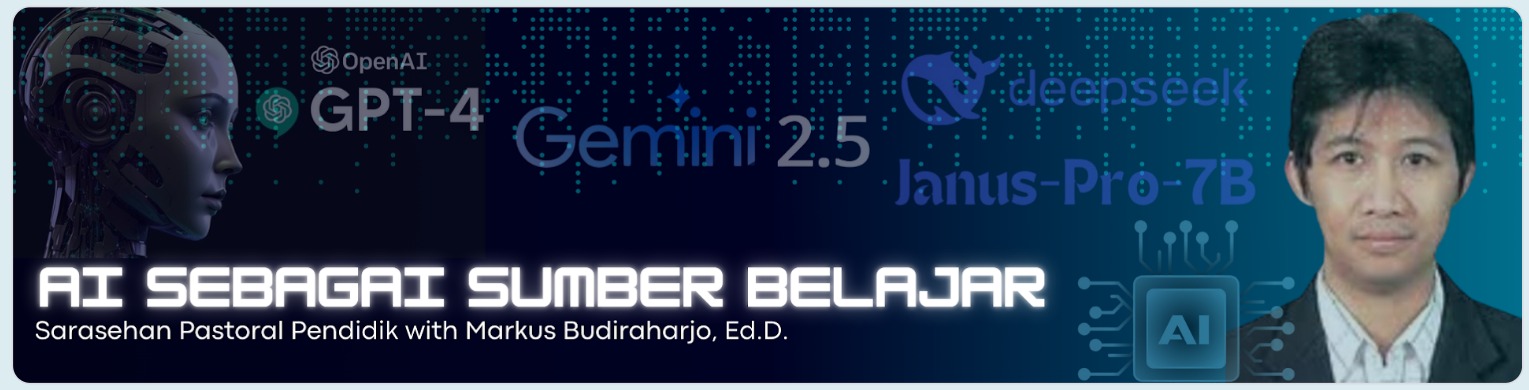
Markus Budiraharjo, the keynote speaker, responded critically. He emphasized the need to protect original works and warned that feeding an entire manuscript into AI systems carries great risks. “It’s like placing your neck under a guillotine,” he said firmly. Mr. Hendri, a lecturer at the Komdigi Civil Service Academy, echoed the concern by cautioning against sharing personal data with GenAI systems, which cannot be permanently erased.
The discussion then turned to education. Mr. Sanusi, senior teacher from De Britto, posed a vital question: how can the use of GenAI encourage rather than diminish students’ critical thinking skills? Markus responded that AI should be treated as a partner. Teachers and parents must model responsible behavior—being wise with social media, fostering a strong reading culture, and encouraging authentic learning activities. He added that true competence consists of declarative, procedural, and conditional knowledge—all of which must be developed in balance.
Quoting Church teachings from the Antiqua et Nova document, Markus stressed that the primary challenge of AI is the potential erosion of human values. “Human intelligence reflects not only our strengths but also our readiness to embrace vulnerability. GenAI prioritizes productivity and results, without engaging with the complexity of human experience. When we overly rely on it for formal recognition, we risk losing honesty and humility.” That evening’s Sarasehan was not merely a conversation about technology—it became a spiritual reflection space on how, as people of faith, we wisely navigate the tides of progress. It marked a promising beginning for cultivating a culture of learning that is critical, contextual, and firmly rooted in human dignity.
-eMBi-.
- Juthatip Mingkun and Co-Researchers Explore Cross-Cultural Teaching Experiences in Thailand
- Caku and Co-Researchers Examine Code-Switching in Viewer Comments on Indonesian Educational YouTube Channel
- MPBI Students, Gabriela and Friends Publish Research Article in Journal of English Educational Study (JEES)
- MPBI Shares Ideas on SDG 4 and Educational Transformation at International Forum
- MPBI Opens 2026 Scholarship Programme for Outstanding Sanata Dharma Alumni
- Becoming a Living Witness: Master’s Program of English Education, Sanata Dharma University Professor Empowers Lay Ministers in St. Maria Assumpta, Parish, Gamping Through Public Speaking Workshop
- Exploring the Responsible Use of Generative AI in Education: MPBI Hosts National Webinar on Ethics, Practices, and Collaboration
- English Mastery and Mindful Pedagogy: Sleman Educators Navigate Digital Friction at SMAN 2 Ngaglik
- Generative AI for Education: Ethics, Practices, and Collaboration
- Inspiring Story: Teacher Yooyee’s Transformative Learning Journey in Yogyakarta