NEWS
Students Present Research on P5 Implementation at SMAN 1 Kalasan, Highlighting Social and Emotional Growth
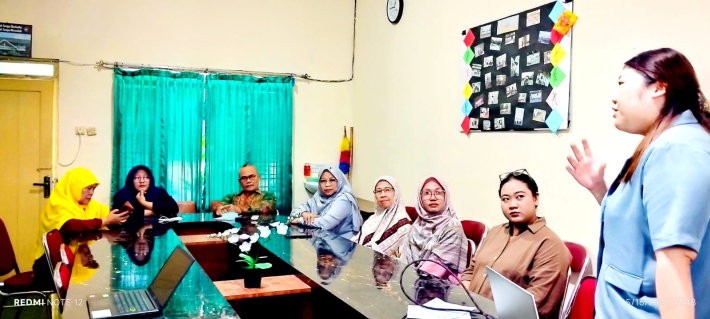
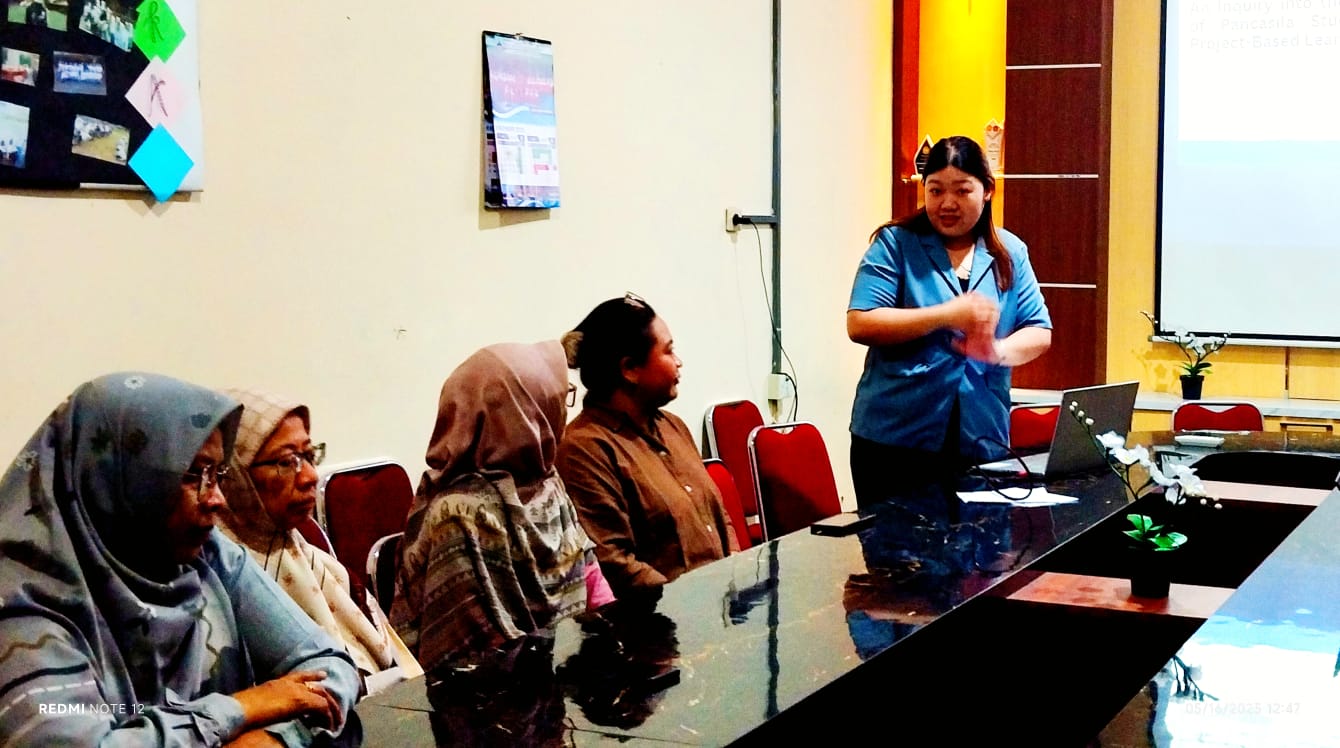
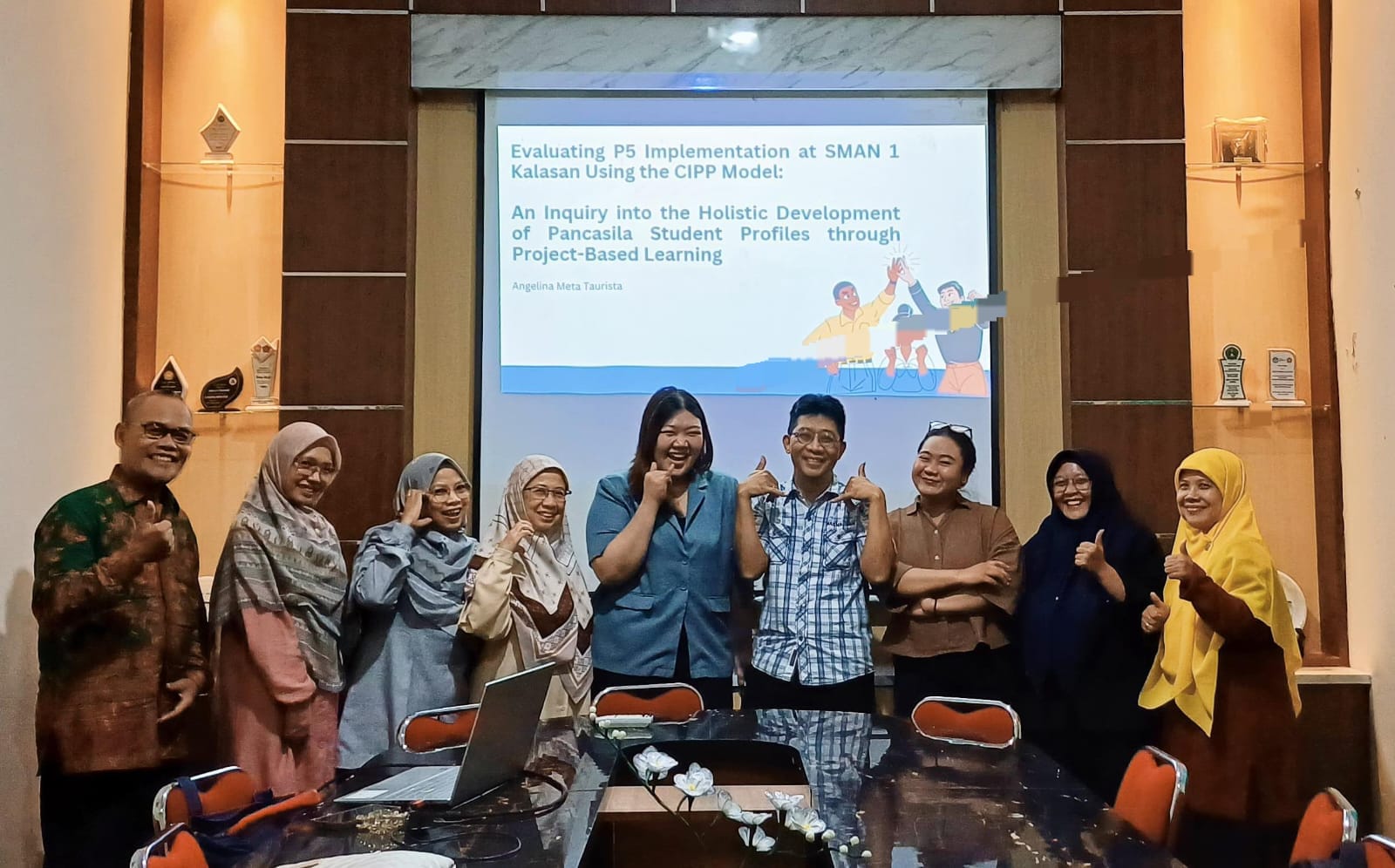
KALASAN - On Friday, May 16, 2025, two students from the English Education Master Program at Sanata Dharma University presented the results of their research on the implementation of the Proyek Penguatan Profil Pelajar Pancasila (P5) program at SMAN 1 Kalasan. The students, Alfira Fanny Kuswandari and Angelina Meta Taurista, conducted their studies under the supervision of Markus Budiraharjo, Ed.M., Ed.D.
The P5 project itself took approximately one month to complete, running from March to April 2025. The research aimed to analyze the impact of the P5 program on students' social and emotional development, explore how Social and Emotional Learning (SEL) principles were reflected in the implementation, and assess students' emotional responses to specific P5 themes, particularly "Social Worker" and "Bangun Jiwa dan Raga". Another study evaluated the effectiveness of the "Bangun Jiwa dan Raga" theme through the "Social Work" program using the CIPP model, analyzing its success in forming the Pancasila Student Profile dimensions.
.jpg)
Drawing on theories like CASEL (2020), SEL encompasses five core dimensions: self-awareness, self-management, social awareness, relationship skills, and responsible decision-making. The research employed a qualitative approach using methods such as semi-structured interviews, focus group discussions (FGD), classroom and field observations, and document analysis.
The findings from the studies indicate that several SEL dimensions were prominent outcomes of the P5 implementation. Social skills and community engagement were identified as the most salient benefits, reported by about 35% of students in one study. Students noted improvements in communication, flexibility, and self-confidence in social situations, learning to interact with new people, work with diverse groups, and participate meaningfully in their community. Quotes from students highlighted increased confidence in speaking with others and adapting to new environments.
Personal development and character building were also frequently mentioned outcomes, accounting for approximately 30% of responses. Students experienced spiritual and ethical growth, with some noting changes in character, such as becoming more patient when interacting with young children. They developed a better understanding of others' needs and conditions, reflecting enhanced empathy and social awareness (about 10%). Students shared that the activities made them "more sensitive to the surrounding environment and the needs of others", and empathetic towards the situations of people in temporary housing.
The P5 program also provided practical experience and skills, reported by about 20% of participants. Students gained experience in teaching, planning activities, and public speaking, which built confidence and competence in real-world situations. For example, one student learned how to teach children at a Quranic learning center and speak in public. Other benefits included general knowledge and new experiences (3%), where students learned about different lifestyles, cultural traditions, and community systems, broadening their perspectives. Some students also mentioned spiritual and moral benefits (about 2%), including increased religiosity, gratitude, and moral awareness, reflecting a focus on traditional moral education.
The implementation of P5 projects like "Social Worker" demonstrated that when students are given meaningful choices, active roles, and clear support, they take ownership of their learning. This led to increased engagement and development in life skills such as empathy, independence, communication, and leadership, aligning with the Pancasila student profile values. Students' reflections highlighted their active participation (47% very active, 44% active in one reflection assessment) and willingness to contribute ideas, complete tasks, discuss, and provide constructive feedback.
Reflection sessions within the P5 projects provided students with space to critically review their experiences, understand group dynamics, recognize personal biases, and evaluate their role in social interactions. This process contributed to students growing into individuals who are more mature morally and socially responsible. The program fostered inquiry and reflective action, encouraging students to ask meaningful questions and act based on critical thinking. Students developed a deeper understanding of social issues, learning to identify, analyze, and respond to community problems. They also showed creativity and innovation, producing original work relevant to their environment and finding solutions to challenges like communication barriers or new group dynamics.
The successful implementation of P5 at SMAN 1 Kalasan was supported by a strong culture of collaboration within the school and with external stakeholders. Strategic preparation, adaptive guidance from teachers, and engagement with community partners created a supportive environment that enriched students' spiritual and moral development through authentic, community-based learning.
Based on the research findings, it was concluded that the P5 program effectively fostered students' emotional intelligence and social responsibility in a tangible and measurable way. Key SEL dimensions observed included relationship skills (communication, teamwork), self-awareness (confidence, reflection), social awareness (empathy, understanding others), and responsible decision-making (volunteer involvement, moral behavior). The studies suggest that the suitability of context, resource readiness, and collaborative learning processes contributed to the effective P5 implementation, with original and transformative student products reflecting the achievement of 21st-century competencies and the Pancasila student profile character. Recommendations for future P5 implementation include strengthening the integration of contextual and reflective Project-Based Learning and expanding collaboration while maintaining focus on forming the six dimensions of the Pancasila Student Profile.
- Juthatip Mingkun and Co-Researchers Explore Cross-Cultural Teaching Experiences in Thailand
- Caku and Co-Researchers Examine Code-Switching in Viewer Comments on Indonesian Educational YouTube Channel
- MPBI Students, Gabriela and Friends Publish Research Article in Journal of English Educational Study (JEES)
- MPBI Shares Ideas on SDG 4 and Educational Transformation at International Forum
- MPBI Opens 2026 Scholarship Programme for Outstanding Sanata Dharma Alumni
- Becoming a Living Witness: Master’s Program of English Education, Sanata Dharma University Professor Empowers Lay Ministers in St. Maria Assumpta, Parish, Gamping Through Public Speaking Workshop
- Exploring the Responsible Use of Generative AI in Education: MPBI Hosts National Webinar on Ethics, Practices, and Collaboration
- English Mastery and Mindful Pedagogy: Sleman Educators Navigate Digital Friction at SMAN 2 Ngaglik
- Generative AI for Education: Ethics, Practices, and Collaboration
- Inspiring Story: Teacher Yooyee’s Transformative Learning Journey in Yogyakarta