NEWS
In-House Training Seminari Menengah Mertoyudan - Thinking Skills in the GenAI Era
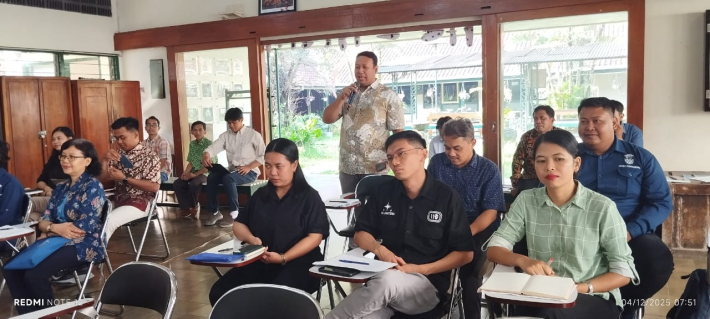
How ready are teachers to accompany seminarians in an increasingly complex and dynamic world? On Saturday, April 12, 2025, Seminari Menengah Mertoyudan responded to this question through an In-House Training (IHT) themed “Skilled Thinking: Continuous Learning in the GenAI Era.” Led by Markus Budiraharjo, Ed.M., Ed.D., the session invited teachers to explore the challenges of GenAI, understand the nature of Gen Z, and deepen their practice of Deep Learning. Reflective, inspiring, and grounded in the need for lifelong learning.
On Saturday, April 12, 2025, Seminari Menengah Mertoyudan held an In-House Training (IHT) for the staff, teachers, and employees of SMA Seminari. The activity took place from 07:30 to 13:00 in the MU recreation room. The core question that triggered this IHT was how prepared the teachers felt in accompanying the seminarians amidst the increasingly complex and dynamic world of today and in the future.
The central theme raised in the IHT was "Terampil Berpikir: Belajar Berkelanjutan dalam Era GenAI" (Skilled Thinking: Continuous Learning in the GenAI Era). The core material and framework for this activity were delivered by the Markus Budiraharjo, Ed.M., Ed.D.
In his presentation, the facilitator highlighted three fundamental reasons why lifelong learning is the key to growth for teachers in facing the information revolution:
- The technological revolution in the form of the emergence of Generative AI (GenAI) tools, which presents disruption and potential if used wisely, but can also stifle critical/creative thinking.
- The demand to understand Generation Z (Gen Z) along with the dynamics and challenges they face, considering their vulnerability in the digital age.
- The urgent need to sharpen thinking skills to remain adaptive amidst complex and dynamic realities. Adaptive thinking skills, according to the facilitator's framework, demand a willingness to recognize one's own limitations, a commitment to creating space for development, daring to question deeply held beliefs, training students' inner sensitivity, learning to use technological tools, and updating understanding of the latest educational policies such as Deep Learning.
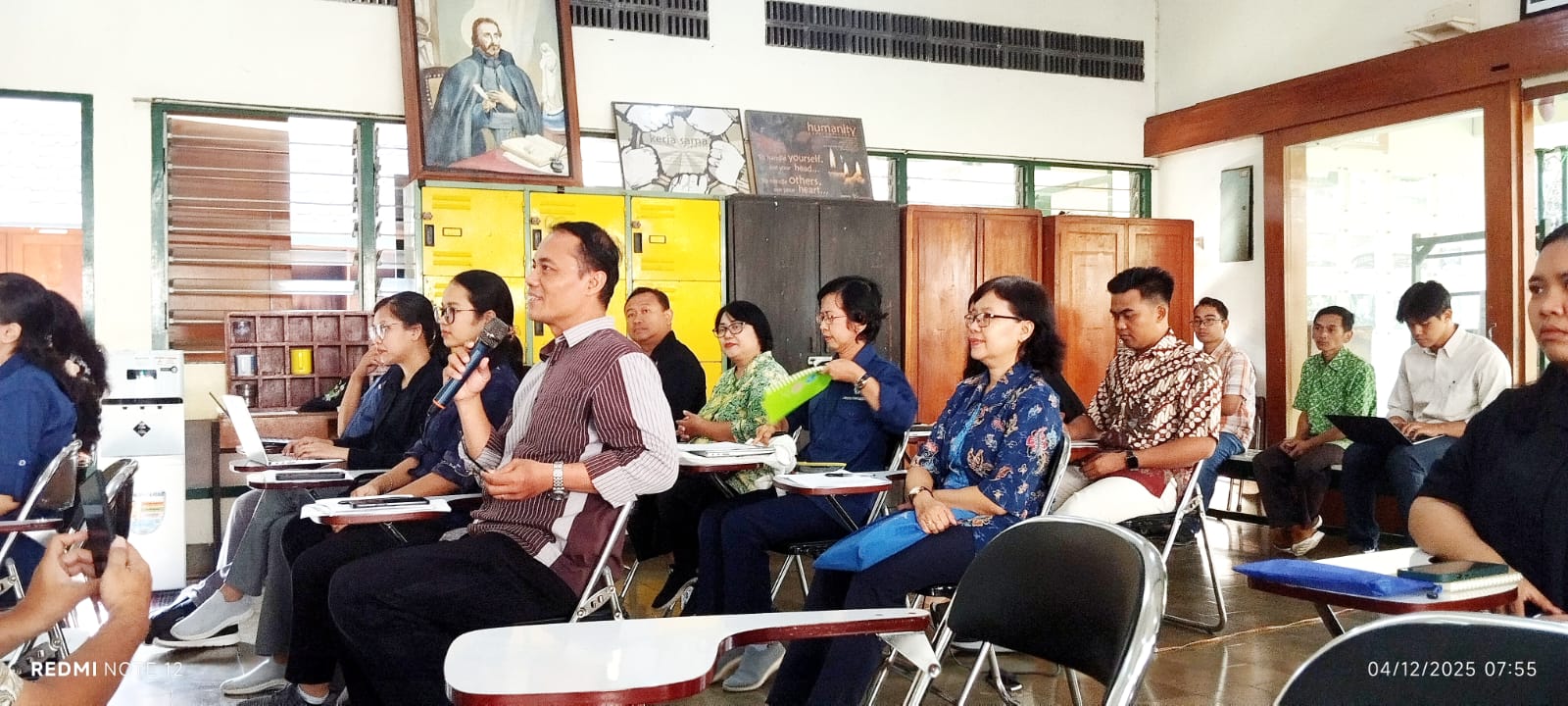 The IHT activity then involved self-evaluation and reflection from the participants based on the themes presented by the facilitator. Quantitative data from the survey showed the teachers' self-perception regarding their understanding and implementation of the topics presented. The results indicated that participants felt most confident in their understanding related to the principles of Deep Learning (81.11%), responsible use of social media (80.71%), and having good relationships with seminarians (80.54%). However, two areas that were still considered challenges among participants were understanding GenAI (72.50%) and implementing Deep Learning (74.38%).
 A deeper qualitative analysis, elaborated from the quantitative data, provided a more detailed picture of the learning outcomes guided by the material delivered by the facilitator:
- Regarding GenAI: Teachers showed varied levels of understanding and awareness of GenAI. They acknowledged its potential for learning and as a "knowledge bank". However, there were concerns, risks, and challenges related to accuracy, trustworthiness, the need for re-verification of information, and the risk of dependency that could reduce critical thinking. The importance of deepening understanding and skills in using GenAI wisely and responsibly was recognized. GenAI is seen as a tool, not the goal. Other potential challenges include ethical issues, privacy, bias, academic integrity violations like plagiarism, and the digital divide. The facilitator’s material emphasized the importance for educators to be aware of the dangers and put in place mitigation structures.
- Regarding Gen Z: Teachers generally felt they had good relationships with Gen Z and were confident they could influence their perspective on learning. Discussions highlighted the importance of appropriate approaches, authenticity, wisdom, and the teacher's role as a listening mentor. The characteristics of Gen Z, such as quickly grasping information but easily getting bored, favoring short visual content, and their need for guidance, emotional depth, critical thinking, and learning objectives, were important focuses that teachers need to understand. Building good relationships is considered a significant tool in the learning process. The facilitator's material specifically dissected the characteristics of Gen Z as digital natives and the potential intergenerational gaps in education.
- Regarding Social Media: Reflection underlined the importance of wisdom in using social media, using it productively, educationally, and collaboratively, and being critical. Discussions touched upon the need for self-limitation, maintaining distance from social media for direct interaction, and limiting the sharing of privacy. Maintaining "sanity" and mental health is crucial due to the addictive nature of social media. The awareness to use it as a means of "humanizing humans" was also emphasized.The facilitator's material extensively discussed the initial positive potential of social media but quickly shifted to negative impacts such as decreased well-being, addiction, loss of natural social relation skills, spread of bias and manipulation, and the formation of echo chambers. He stressed the importance of digital literacy and smart, contextual use.
- Regarding Deep Learning (DL): The report analyzed the understanding and implementation of Deep Learning based on the discussions. Deep Learning was explained as an approach (not a new curriculum) that focuses on holistic development, higher-order thinking skills, and learning experiences that are Mindful, Meaningful, and Joyful (Berkesadaran, Bermakna, dan Menggembirakan). Teachers need to understand these principles and be aware of them in the learning process. Meaningful learning is built upon what students already know and is deepened, supported by reflection to find life's meaning and values. Joyful learning requires a positive, creative, and engaging atmosphere. These three principles are interconnected. Although often applied unconsciously, they require deepening and consistency, especially with the use of digital tools and partnerships. Discussions also highlighted the need for creative, innovative, flexible learning, using design thinking, connecting with real-world issues, and paying attention to learning components to stimulate critical thinking. Reflection is considered crucial in the DL process, connecting experience and phenomena with deep understanding and personal growth. The facilitator's material presented DL as a policy framework, the 3M principles, implementation within 4 frameworks (pedagogical practices, learning environment, digital utilization, partnerships), learning experiences (understanding, applying, reflecting), the teacher's role, and assessment.
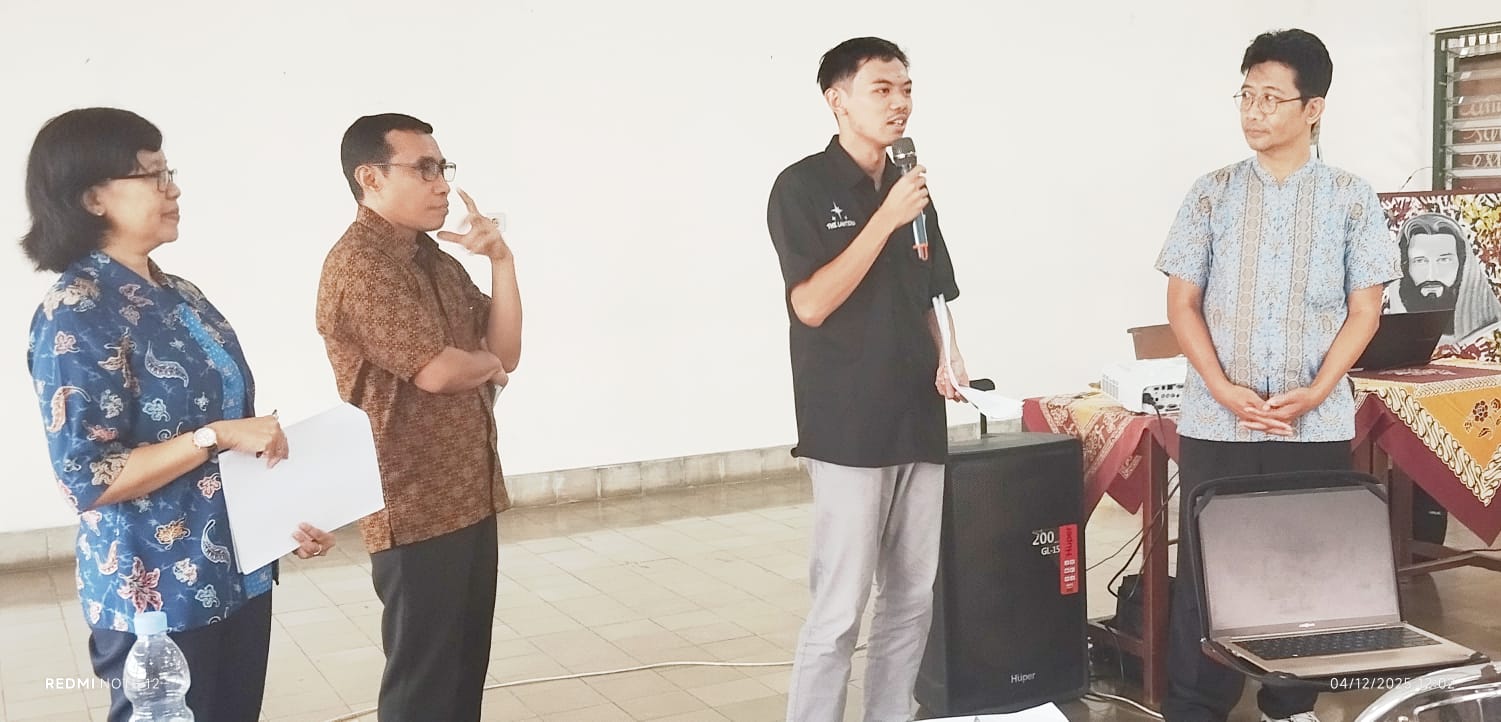
Overall, the IHT facilitated by the facilitator underscored the importance for educators to continue learning. The discussions and reflections that took place resulted in various suggestions for the school, such as improving learning methods and curriculum (including GenAI integration), enhancing digital facilities, strengthening internal and external collaboration, and developing educators' competencies through training (GenAI, Gen Z, social/emotional skills, creative methods, research culture).
Participants also noted various personal commitments arising from the material presented, including becoming lifelong learners, specifically learning GenAI seriously, developing more engaging and meaningful teaching methods relevant to the Gen Z context, increasing collaboration, focusing on student accompaniment and well-being, and consistently applying the principles of Deep Learning.
Through the presentation and guidance from the facilitator, this IHT successfully encouraged teachers at Seminari Menengah Mertoyudan to reflect on their readiness in the GenAI and Gen Z era, and fostered awareness of the need for continuous learning and the implementation of adaptive pedagogical approaches like Deep Learning. (eMBi)
- Juthatip Mingkun and Co-Researchers Explore Cross-Cultural Teaching Experiences in Thailand
- Caku and Co-Researchers Examine Code-Switching in Viewer Comments on Indonesian Educational YouTube Channel
- MPBI Students, Gabriela and Friends Publish Research Article in Journal of English Educational Study (JEES)
- MPBI Shares Ideas on SDG 4 and Educational Transformation at International Forum
- MPBI Opens 2026 Scholarship Programme for Outstanding Sanata Dharma Alumni
- Becoming a Living Witness: Master’s Program of English Education, Sanata Dharma University Professor Empowers Lay Ministers in St. Maria Assumpta, Parish, Gamping Through Public Speaking Workshop
- Exploring the Responsible Use of Generative AI in Education: MPBI Hosts National Webinar on Ethics, Practices, and Collaboration
- English Mastery and Mindful Pedagogy: Sleman Educators Navigate Digital Friction at SMAN 2 Ngaglik
- Generative AI for Education: Ethics, Practices, and Collaboration
- Inspiring Story: Teacher Yooyee’s Transformative Learning Journey in Yogyakarta